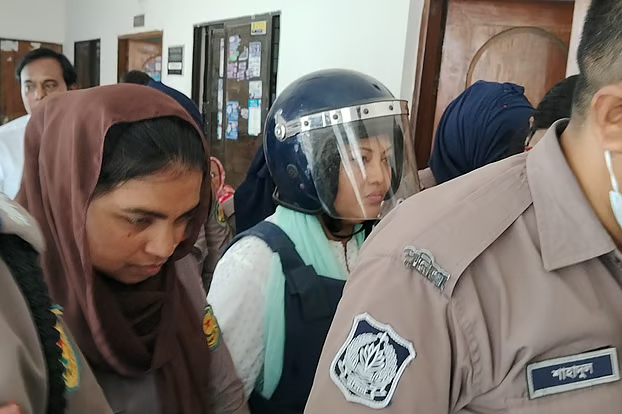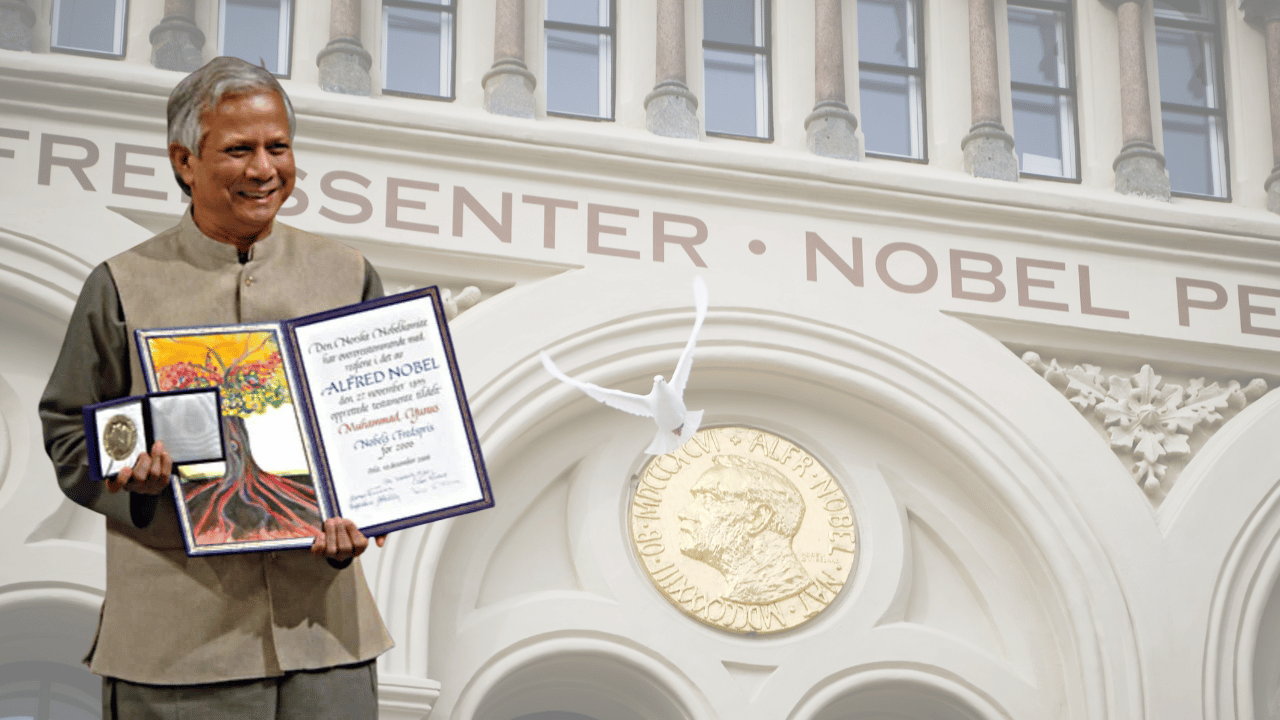
Global human rights leaders warn the Nobel Committee of worsening abuses in Bangladesh, urging moral clarity as violence, repression, and silence raise alarms.
Representatives of human rights organizations from multiple countries have expressed deep concern over Bangladesh’s ongoing human rights and humanitarian crisis. In a joint letter sent to the Norwegian Nobel Committee, they warned that the country has witnessed a severe deterioration in human rights conditions in recent times—an erosion so serious that it has begun to shake the conscience of the international community.
According to the letter, credible reports and eyewitness testimonies reveal a disturbing pattern of targeted violence across Bangladesh. These include the destruction of homes and livelihoods, attacks on religious and cultural institutions, and, most alarmingly, systematic persecution of religious and ethnic minorities. The signatories stress that women and children have emerged as the most vulnerable and disproportionately affected victims of this violence.
Pattern of Systematic Human Rights Violations
The human rights leaders emphasize that the incidents described are not isolated or spontaneous. Rather, they reflect an organized and sustained pattern of fundamental human rights violations. The letter argues that the continuity and scale of these abuses point to a broader humanitarian crisis that demands urgent international attention.
Victims, the letter notes, are increasingly living in fear, displacement, and insecurity. Entire communities have reportedly lost not only physical safety but also economic stability and access to basic dignity. Such conditions, the authors warn, undermine the very foundations of peace and social cohesion.
Silence of a Nobel Laureate Raises Questions
In this context, the signatories raise serious concerns about the public silence of Nobel Peace Prize laureate Dr. Muhammad Yunus, who currently serves as the Chief Adviser of Bangladesh’s interim government. They argue that his lack of a clear and vocal stance amid widespread rights violations has sparked profound ethical questions.
The letter states unequivocally that silence in the face of injustice is never neutrality. Instead, it constitutes a moral position—one that carries grave consequences. Peace, the authors argue, cannot survive in a society where fear dominates daily life and where fundamental rights are systematically violated. Under such conditions, claims of neutrality lose all moral legitimacy
Moral Responsibility of the Nobel Committee
The joint letter calls upon the Norwegian Nobel Committee and the Nobel Foundation to uphold the ethical integrity of the Nobel Peace Prize. The signatories urge the institutions to demonstrate transparency, moral clarity, and courage when confronted with human suffering.
They stress that the Nobel Peace Prize is not merely an honorary distinction but a symbol of justice, human dignity, and principled leadership. Remaining silent in moments of grave injustice, they argue, would contradict the very values upon which the prize was founded.
Call for Justice and Recognition of Victims
The letter further asserts that the victims in Bangladesh are entitled to recognition, accountability, and justice. The global conscience, the authors write, cannot abdicate responsibility at such a critical juncture. The Nobel Peace Prize, they insist, must stand as a symbol of justice—not silence.
In its concluding remarks, the letter expresses hope that at a time when human dignity is under extreme threat, the Nobel Committee will take a firm and humane position. Such a stance, the authors believe, would become a defining moral moment remembered by history.
Signatories to the Letter
The joint letter was signed by a diverse group of international human rights advocates and civil society leaders, including:
- Reverend Dr. Robert B. Lancia, former legislator, Rhode Island House of Representatives, USA
- Paolo Casaca, Founder and Executive Director, South Asia Democratic Forum, Belgium
- Chris Blackburn, Communications Director, European Bangladesh Forum, United Kingdom
- Alan Rides, Director, West London Chamber of Commerce, United Kingdom
- Natalia Siniaieva, Representative, “Never Again” Association, Poland
- Charlotte Jacquemart, Senior Editor, Schweizer Radio und Fernsehen (SRF), Switzerland
- Priyojit Debsarkar, Chief Editor, Bridge Bangla Foundation, United Kingdom
- Professor Dr. Md. Habibe Millat, President, Global Center for Democratic Governance, Canada
International Context
Concerns over Bangladesh’s human rights situation have previously been echoed by international bodies, including the United Nations, global rights organizations, and major international media outlets such as BBC, Al Jazeera, and Deutsche Welle, which have reported on issues related to political violence, minority persecution, and civic freedoms in the country.
Conclusion
The letter to the Norwegian Nobel Committee places Bangladesh’s human rights crisis firmly under the global spotlight. As international pressure mounts, observers argue that the response—or lack thereof—by the Nobel Committee and associated institutions may define not only their moral credibility, but also the future role of the Nobel Peace Prize as a global symbol of justice and human dignity.
About the Author