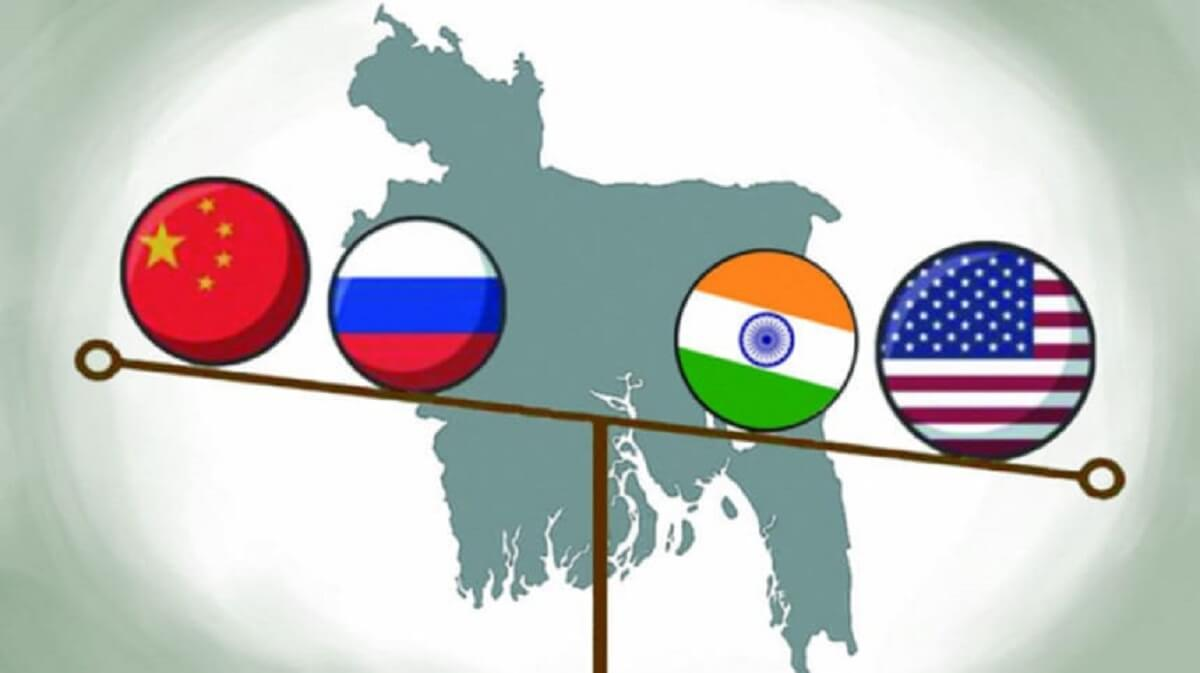
Prof. Dr. Arif analyzes BNP’s shift in foreign policy amid global crises, internal ideological conflicts, and the strategic contrast with the Awami League.
By Prof. Dr. Arif Khan
Special Column | April 5, 2026
The current shifting sands of global politics, defined by the Ukraine-Russia energy crisis and the Middle East conflict, have forced the Bangladesh Nationalist Party (BNP) into a deceptive diplomatic dance. While they currently project an image of seeking reconciliation with India, a deeper analysis suggests this is merely a tactical maneuver to navigate intense American bilateral pressure. History reminds us that the BNP’s internal mindset remains tethered to the 2001 era, where they played a dangerous game between global powers. During that period, despite backing from the Indo-American axis for gas contracts, the BNP ultimately pivoted toward the USA-Pakistan front, even facilitating weapon supplies to insurgents like ULFA.
The Conflict of Interest: Choosing Washington Over Delhi
BNP strategists are currently studying India’s vulnerabilities while knowing their survival depends almost entirely on the United States for military and political control. This creates an inevitable conflict of interest where the party will ultimately be forced to choose Washington’s dictates over New Delhi’s regional concerns. We are witnessing a calculated preparation where the BNP aims to “let down” India on the diplomatic stage once they have secured their grip on state machinery. They believe they can leverage India’s systemic weaknesses to force acceptance of this betrayal as a “sovereign decision,” leaving their neighbor with few options for retaliation.
The Danger of a Dependent State Machinery
A government that lacks a genuine public mandate becomes a puppet of the administrative and military “deep state” to maintain its long-term survival. The BNP originates from a staunchly anti-India political platform, and their core support base continues to thrive on this nationalist sentiment. Consequently, they cannot deviate from this path without risking their internal foundations, especially since the military and secretariat remain heavily influenced by a shared BNP-Jamaat portfolio. The last election, reportedly engineered by deep-state actors with a meager 20-25% actual voter turnout, has only intensified this reliance on bureaucracy over the ballot box.
Why a 50% Mandate Changes the Foreign Policy Equation
In sharp contrast to a dependent regime, a government elected with a true majority of over 50% possesses the moral and political strength to curb corruption. Such a government does not need to trade national interests for survival because its power stems directly from the people’s bank of votes. This mandate allows a leader to choose trade options and foreign policies based purely on merit, regional harmony, and long-term stability. A truly representative government acts as a shield against foreign hegemonies rather than a gateway for proxy wars and regional instability.
Awami League’s Non-Alignment: A Blueprint for Prosperity
The Awami League, under the leadership of Sheikh Hasina, consistently maintained a policy of non-alignment to ensure a balanced fiscal framework for the nation. By awarding the Payra Port contract to China, the administration invited garment investment while simultaneously preventing the territory from becoming a proxy zone for anti-Chinese conspiracies. Similarly, the Matarbari project was awarded to JICA to link the Japanese EPZ production hubs with India’s “Seven Sisters” states, fostering a massive influx of FDI and supply chain growth.
The Illusion of Bold Sovereignty
The BNP’s future decisions will likely be marketed as “bold, sovereign moves” or “anti-neighbor patriotism” to appease their local political pillars. However, these one-sided decisions are often the result of desperate negotiations with a chosen hegemonic power to keep an unpopular administration afloat. Unlike the strategic balance maintained by the previous regime, this path leads to a fragile dependency that risks turning Bangladesh into a battleground for global superpowers. True regional prosperity requires a government that stands on its own feet, backed by the real mandate of its citizens.
About the Author